The first time I built one of these, I thought “launch” meant the website worked. Pages loaded, the search box searched, the listings showed up. Ship it.
I was wrong about what “ready” meant, and I’ve been wrong about it in a slightly different way on every build since. Not because the code was broken, but because the website was never the hard part.
The hard part is everything that has to be true before the website matters: the niche has to be validated, the data has to exist, the structure has to be right, and the content has to actually help someone. A directory with clean code and no real listings is not a directory. It’s a demo.
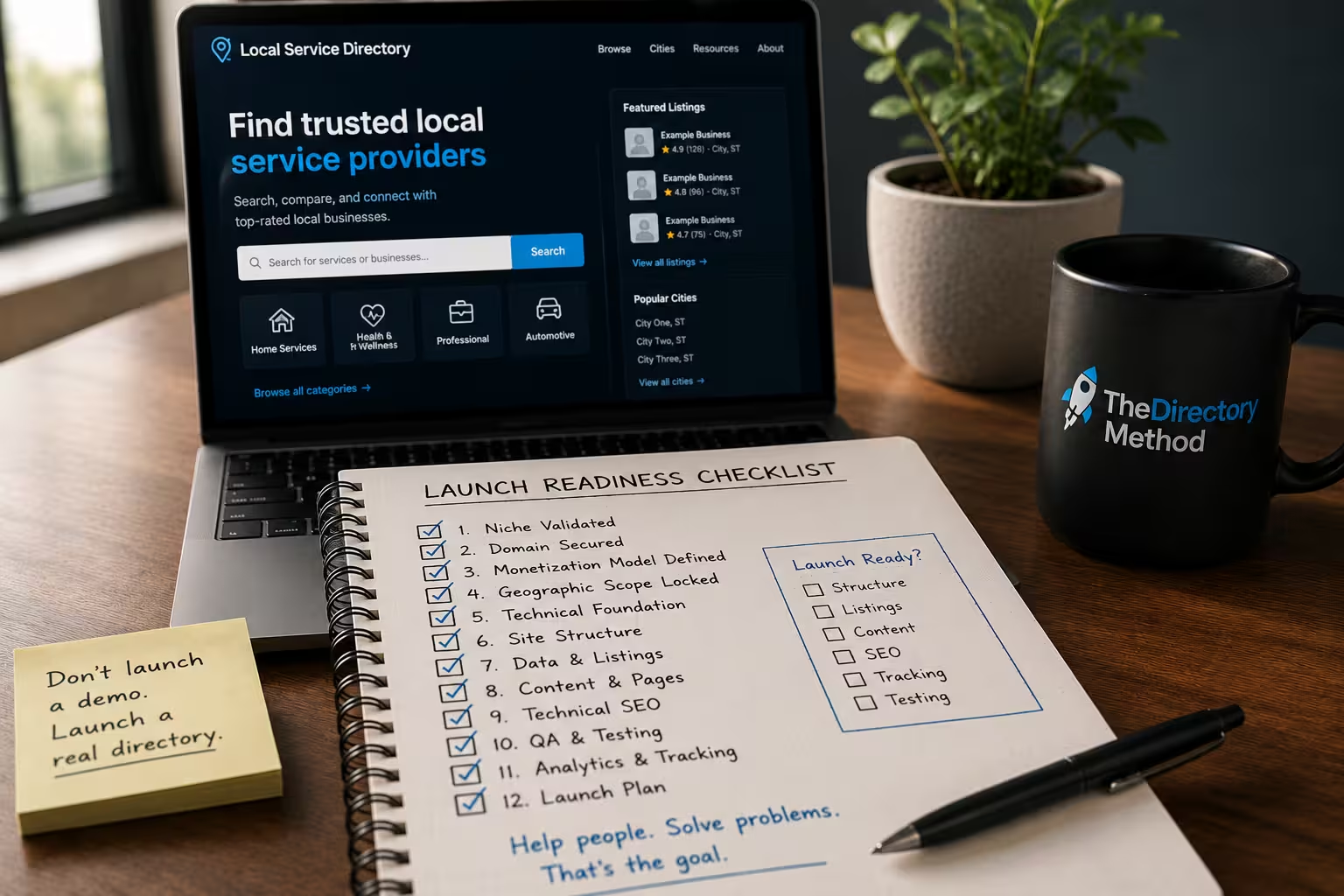
This is the checklist I actually run before I call something launch-ready: what I build, in what order, and which parts of it I’ve learned to stop rushing.
“Ready” isn’t a feeling, it’s a list
Every one of my builds has had a moment where the site looked done. The homepage was polished, the listing pages rendered nicely, the design felt tight. That feeling is not a launch signal. It’s a design signal.
What actually determines whether a directory is ready to launch is a specific, checkable list of things, and the list is mostly boring. Structure. Data. Technical SEO. QA. None of it is exciting, and that’s exactly why it’s the part people skip.
I break it into six groups, roughly in the order I actually do them.
1. The decisions that have to be locked before you write a line of code
If you haven’t validated the niche itself yet, stop here. That’s a separate, earlier step, and skipping it is the single most expensive mistake available to you. (I’ve written about how I actually run that validation: scoring real search volume and competition data before committing to anything.)
Assuming the niche is validated, three more decisions need to be locked before build starts, because changing them later is expensive:
- The domain. Available at standard registration, not a premium resale price. Short enough to say out loud. Spellable from hearing it once. If your “perfect” domain requires a four-figure premium purchase, it’s usually cheaper to find the second-best name that’s actually available.
- The monetization model. Featured listings, claimed profiles, lead-gen, affiliate, or some mix. You don’t need it built on day one, but you need to know which one you’re building toward, because it changes what data you collect about each business from the start. Retrofitting “years in business” or “license number” onto 500 existing listings later is a much worse job than collecting it during initial data acquisition.
- The geographic scope. National with local pages, or a single region. This decision shapes your entire site hierarchy (state → city → listing, or something flatter), and reversing it after launch means restructuring URLs you’ve already been indexed on.
None of these are technical decisions. All of them determine what the technical build looks like. Lock them first.
2. The technical foundation
This is the part that gets the most attention and, in my experience, deserves the least worry, mostly because it’s the same foundation every time, which is the point.
I use the same stack across every directory I build: Ruby on Rails, Tailwind, Hotwire (Turbo + Stimulus) instead of a heavy JavaScript framework, Postgres, Fly.io for hosting, and Cloudflare in front of it for CDN/DNS/SSL.
AI-assisted development (I use Claude Code) makes this fast enough that a custom-built, server-rendered directory isn’t meaningfully slower to stand up than dropping in an off-the-shelf directory plugin, and it means I’m never fighting a plugin’s assumptions about what a “listing” is.
The checklist here is mechanical, not creative:
- Repository initialized, core gems/framework configured
- Database created and migrated, seeded with development data
- Hosting and DNS configured, SSL verified
- Staging and production kept separate
If you’re technical enough to evaluate this list, you already know how to execute it. If you’re not, this is the one section worth paying someone to do right rather than learning on a live site: a broken deploy pipeline is invisible right up until it costs you a day during launch week.
3. The site structure
This is where a lot of directories quietly go wrong, because a plausible-looking structure and a good one look identical until you’re six months in and trying to add a feature the architecture didn’t anticipate.
The structure I use, and the one I’d recommend as a default unless you have a specific reason to deviate:
Home
 └─ Browse / Category
     └─ State
         └─ City
             └─ Business Listing
 └─ Resources (educational content)
 └─ About / Contact / How It Works / Legal
A few rules I’ve learned to enforce strictly:
- Every page needs a reason to exist beyond SEO. A state page that’s just a bare list of cities is a thin page Google will treat accordingly. It needs an introduction, featured listings, and a couple of genuinely useful internal links, enough that it would still be worth visiting if search engines didn’t exist.
- URLs should be stable from day one.
/state/city/listing-name, decide the pattern before you launch, because changing URL structure after indexing means burning months of accumulated signal on redirects. - Every listing page should be a real landing page, not a contact card. Business name, address, phone, hours, and a map is the floor, not the offering. The listings that actually differentiate a directory from a Google Business Profile carry categories, service details, credentials, photos, related businesses, and FAQs. If your listing page doesn’t offer more than what’s already in the Google Business Profile, you haven’t built a reason for anyone to prefer your site.
Design for future features without building them yet. Claiming, reviews, saved favorites, user accounts: sketch how they’d attach to this structure later, but don’t build any of them for launch. None of them matter if there’s nothing populated to claim, review, or save.
4. The data: this is the part people underestimate
If I had to name the single most consistently underestimated part of building a directory, it’s this one, and it’s not close. Everyone budgets time for the website. Almost nobody budgets enough time for the listings.
A directory’s actual product is the data. The website is the interface to it. And good listing data is genuinely hard to get right:
- Sourcing: finding a real, comprehensive dataset for the niche, not a scraped list full of closed businesses and duplicates.
- Verification: removing duplicates, confirming the business is real and still operating, catching obviously bad data before it goes live.
- Enrichment: this is where most directories stop too early. Basic contact info is table stakes. What makes a listing worth visiting is the layer on top: certifications, specialties, service areas, years in business, payment methods, accessibility, languages spoken, whatever fields are actually relevant to how someone chooses a provider in your specific niche.
I don’t launch until there’s a real, verified dataset behind the site, not a handful of seed listings to make the demo look populated.
A directory that launches with 40 half-verified listings and a beautiful UI will lose to a directory that launches with 400 well-enriched listings and an average UI, every time. Users don’t forgive a directory for being empty just because it’s pretty.
5. Core technical SEO: invisible, non-negotiable
None of this is glamorous, and all of it is a genuine launch blocker if missing:
- Sitemap, robots.txt, canonical tags on every page
- Metadata and Open Graph tags, written for humans, not stuffed with keywords
- Structured data appropriate to the page type (Organization, LocalBusiness, Article, BreadcrumbList)
- Google Search Console and Analytics connected before launch, not after: you want a baseline, and you want to catch crawl errors from day one instead of discovering them a month in
- Breadcrumbs on every page
I treat this as a hard gate. If any of it is missing, the site isn’t launched. It’s just live.
6. QA: the boring pass that saves you
The last thing I do before flipping a directory live is a deliberately unglamorous pass:
- Mobile responsiveness (most of your traffic will be mobile, check on an actual phone, not just a resized browser window)
- Broken links and missing images, checked systematically, not by clicking around
- Duplicate pages (a common bug in state/city hierarchies, make sure two different URLs aren’t rendering identical content)
- Search actually returns relevant results for real queries, not just the happy-path query you tested during development
- Page speed and basic accessibility
None of this is interesting work. All of it is the difference between a soft launch that goes smoothly and one where the first real visitor finds the bug you didn’t.
What “launched” actually means
A directory is genuinely ready, not just live, but ready, when all of the following are true at once:
| Requirement | Why it’s non-negotiable |
|---|---|
| Niche validated with real data, not instinct | Everything downstream depends on this being right |
| Domain secured, monetization model chosen | Both get expensive to change later |
| Core pages built on a stable, sensible URL structure | Restructuring after indexing costs you accumulated SEO signal |
| Real, verified, enriched listing data, not seed data | The listings are the product; the site is the interface |
| Sitemap, metadata, structured data, Search Console live | Invisible until it’s a launch blocker |
| QA pass completed on mobile and desktop | The first real visitor shouldn’t find your first bug |
| Foundational content published (About, How It Works, a small set of genuinely useful resources) | Quality over quantity: a handful of excellent pages beats twenty thin ones |
Notice what’s not on that list: reviews, user accounts, a claim-listing flow, a premium-listings checkout, a mobile app, a blog with fifty articles. Every one of those is a real future feature. None of them is a launch requirement.
Building them before launch is usually a way of delaying the part that actually matters: getting real data in front of real searchers and finding out if the niche behaves the way your research said it would.
Launch is not the finish line. It’s the point where the site starts telling you things your research couldn’t.
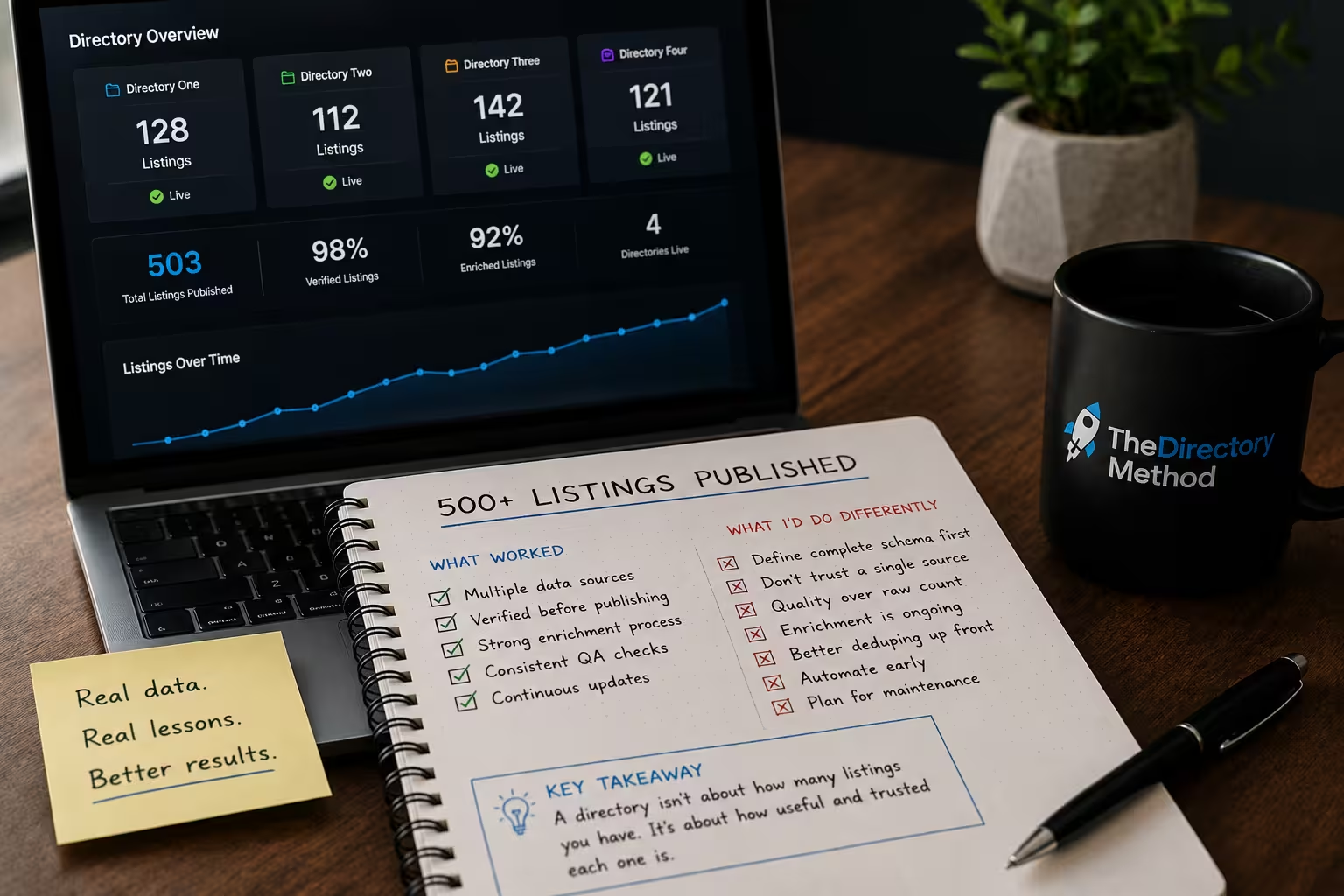
That’s the subject of the next post: I’ve now populated a few hundred listings across the directories I’ve built, and there’s a real gap between what looks right on a spreadsheet and what actually holds up once a directory goes live. Here’s what I’d do differently.